

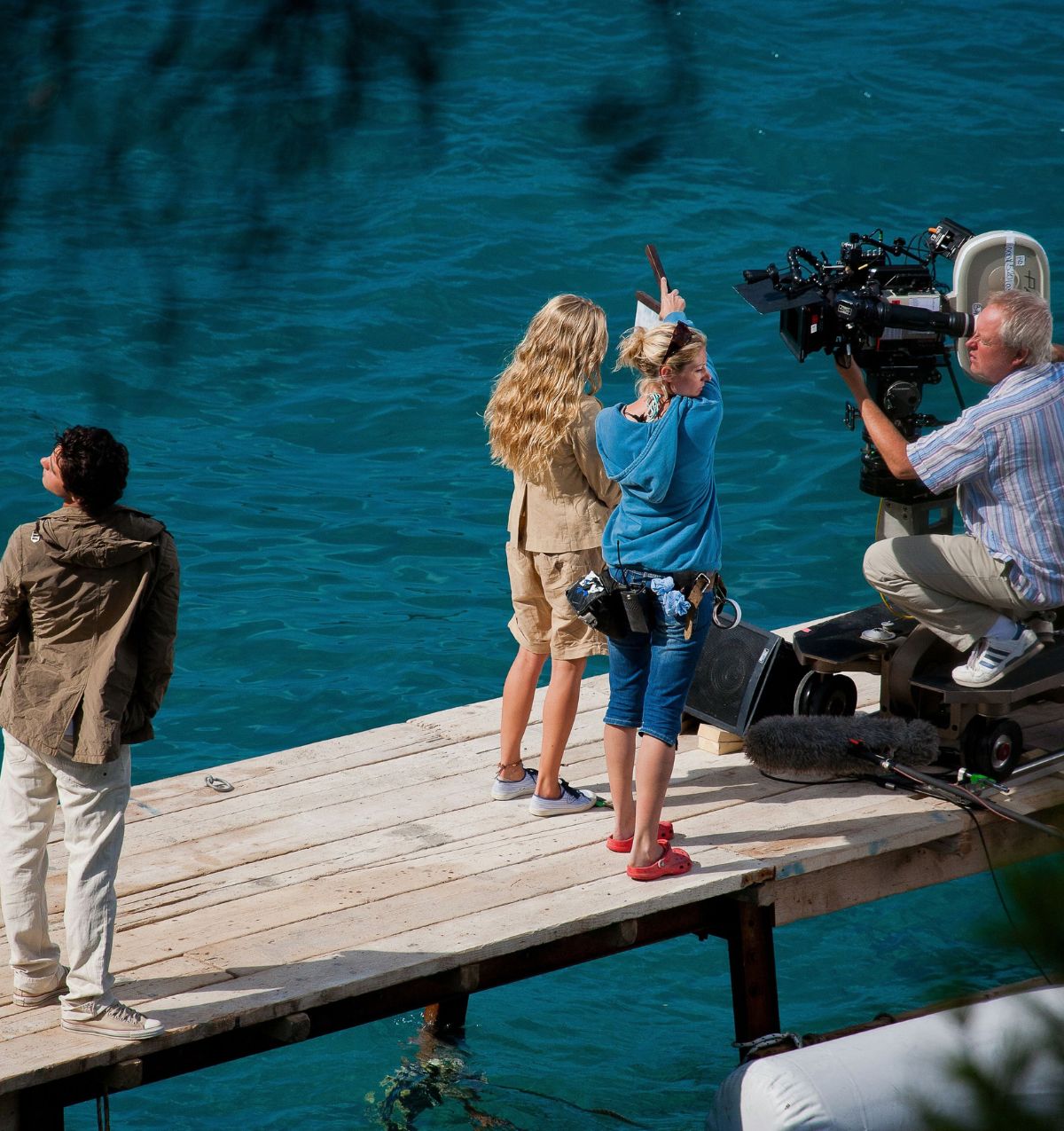
Mamma Mia Filming Locations in Skiathos
From the picturesque Old Port of Skiathos to the famous wedding chapel on Skopelos, discover the real Greek locations behind Mamma Mia! and the island stories that continue long after the cameras stopped rolling.
Some films stay with us long after the credits have rolled. Others make us want to travel somewhere entirely new.
When Mamma Mia! arrived on cinema screens in 2008, it introduced audiences around the world to a version of Greece filled with turquoise waters, pine-covered hillsides, sunlit villages and the irresistible feeling that life might be better lived beside the sea.
The fictional island of Kalokairi seemed almost too beautiful to be real.
And in one sense, it was.
Rather than filming on a single Greek island, the production brought together several remarkable locations across the Northern Sporades and mainland Greece. Skiathos, Skopelos and the coastal village of Damouchari each contributed something different to the film’s unforgettable scenery.
For travellers hoping to discover the real Mamma Mia! filming locations in Skiathos, the story begins in the island’s historic harbour. But it also leads beyond Skiathos, to neighbouring Skopelos and the landscapes that helped create one of cinema’s most recognisable Greek island settings.
And for Mandraki Village, the story has an especially personal chapter.
WHERE WAS MAMMA MIA! REALLY FILMED?
The original Mamma Mia! movie was filmed in 2007, with its Greek location shoots taking place across Skiathos, Skopelos and the Pelion peninsula.
Skopelos provided many of the film’s most famous outdoor settings, including the dramatic wedding chapel and the beaches featured in several musical sequences. Skiathos contributed memorable harbour and town scenes, while Damouchari, on mainland Pelion, became the setting for part of the exuberant Dancing Queen sequence.
Other scenes, including much of the fictional Villa Donna, were created at Pinewood Studios in England.
The result was a cinematic island that existed not on a map, but through the combination of several real places.
Today, many of those locations can still be visited, making a holiday in Skiathos an opportunity to step into the landscapes behind the film.
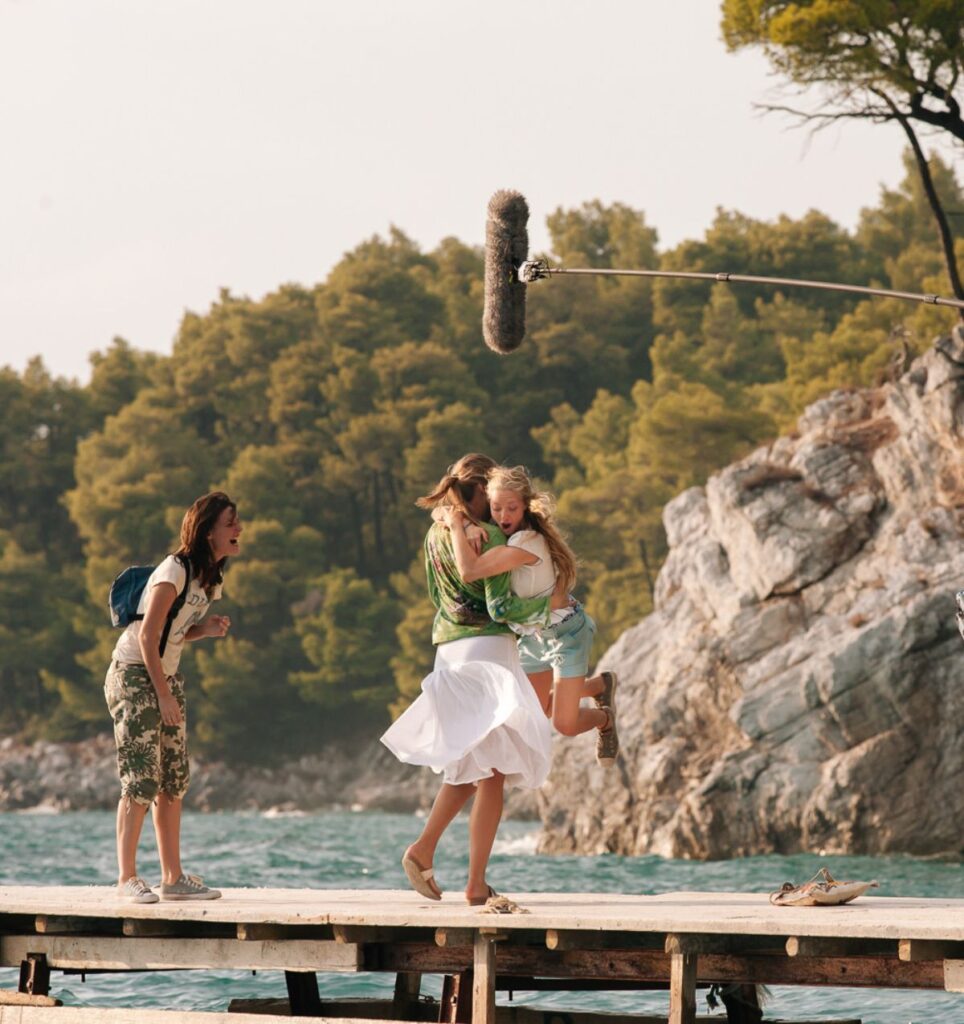
THE REAL MAMMA MIA! FILMING LOCATIONS IN SKIATHOS
Although Skopelos hosted much of the film’s outdoor production, Skiathos played an important part in introducing audiences to Kalokairi.
Two locations in particular are associated with the movie: the Old Port and the area around Agios Nikolaos Church and its distinctive clock tower.
SKIATHOS OLD PORT: WHERE THE JOURNEY TO KALOKAIRI BEGINS
The Old Port of Skiathos is one of the island’s most recognisable filming locations.
In the movie, Sam and Harry, two of Sophie’s possible fathers, find themselves racing to catch the boat that will take them to Kalokairi. Their attempt does not go quite as planned, creating one of the film’s memorable early moments.
The harbour provides the backdrop for this sequence, with its waterfront, moored boats and traditional island atmosphere.
What makes the location particularly special is that it remains part of everyday life in Skiathos.
Fishing boats and excursion vessels still gather along the waterfront, cafés and restaurants line the harbour, and visitors can walk through the same historic setting that appeared on screen.
There is no elaborate film set or official attraction to enter. The pleasure lies in recognising a real place that briefly became part of a fictional world.
For fans of the movie, an evening walk through the Old Port is one of the simplest ways to begin discovering its Greek filming history.
AGIOS NIKOLAOS CHURCH & THE ROOFTOPS OF SKIATHOS TOWN
Above the Old Port, the Church of Agios Nikolaos and its clock tower rise over the rooftops of Skiathos Town.
The area is associated with the film’s opening sequence, when Sophie prepares to send invitations to the three men who might be her father.
The traditional rooftops, whitewashed buildings and distinctive bell tower help establish the Greek island atmosphere that becomes central to the story.
Today, visitors can walk through the narrow streets leading towards Agios Nikolaos and enjoy panoramic views across the town and harbour.
It is worth visiting even without the cinematic connection.
From above, Skiathos reveals a different character: closely gathered houses, winding lanes and the sea stretching beyond the harbour.
The exact camera positions used during filming are not marked, but the surrounding townscape remains an evocative reminder of the film’s opening moments.
SKOPELOS: THE ISLAND BEHIND MAMMA MIA!’S MOST FAMOUS SCENES
If Skiathos introduces the journey, Skopelos provides much of the scenery that audiences remember most vividly.
The neighbouring island was the principal Greek outdoor filming destination for Mamma Mia!, and several of its beaches and coastal landmarks became internationally recognised after the film’s release.
For visitors staying in Skiathos, discovering these locations can be a memorable addition to an island holiday.
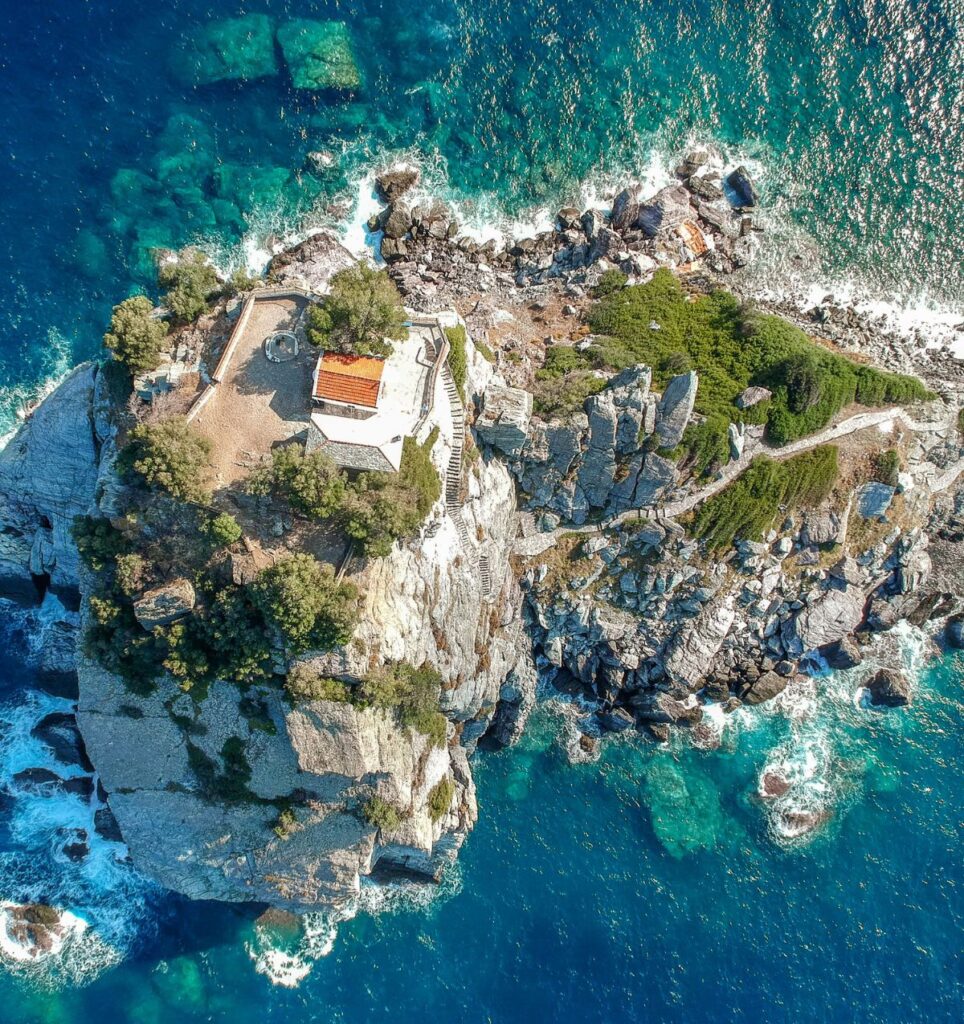
AGIOS IOANNIS KASTRI: THE FAMOUS MAMMA MIA! WEDDING CHAPEL
Perhaps no location is more closely associated with Mamma Mia! than the small chapel perched high above the sea.
Agios Ioannis Kastri stands on a dramatic rocky outcrop on the northern side of Skopelos, near Glossa.
Its extraordinary setting made it the perfect location for the film’s wedding procession, creating one of its most memorable visual moments.
Reaching the chapel involves climbing a steep series of stone steps, but the views from the top are spectacular. The surrounding coastline, open sea and rocky landscape make the journey worthwhile even for visitors who have never seen the movie.
One important detail is that the chapel’s exterior and setting were used for the production, while interior scenes were filmed elsewhere.
The real location is also smaller and more intimate than its cinematic appearance might suggest.
Nevertheless, standing above the Aegean with the chapel behind you is about as close as a visitor can come to stepping directly into the world of Mamma Mia!
KASTANI BEACH: WHERE MUSIC MET THE AEGEAN
Kastani Beach is another of the film’s most celebrated locations.
Surrounded by green hills and washed by clear turquoise waters, this beautiful beach on Skopelos provided the setting for musical sequences including Lay All Your Love on Me and Does Your Mother Know.
Its natural scenery played a significant role in creating the film’s joyful summer atmosphere.
During production, temporary structures were added to the beach, including a wooden jetty and beach bar. These were removed after filming, so visitors should not expect to find the original movie set waiting on the sand.
What remains is the landscape itself.
The beach, the surrounding greenery and the distinctive colours of the sea are more than enough to explain why the filmmakers chose it.
For many Mamma Mia! fans, Kastani is an essential stop on any visit to Skopelos.
GLYSTERI AND THE COASTLINE OF SKOPELOS
The film also drew inspiration from other parts of Skopelos, including the coastline around Glysteri.
Here, sheltered coves, rocky formations and deep green vegetation create the kind of natural scenery that helped define Kalokairi’s appearance.
Some of these landscapes appear within broader sequences combining footage from different locations.
This is an important part of understanding how the movie was made: what appears to be one continuous journey on screen may actually bring together places separated by considerable distances.
Exploring Skopelos by boat can be a particularly enjoyable way to appreciate the island’s dramatic coastline, whether or not every bay is immediately recognisable from the film.
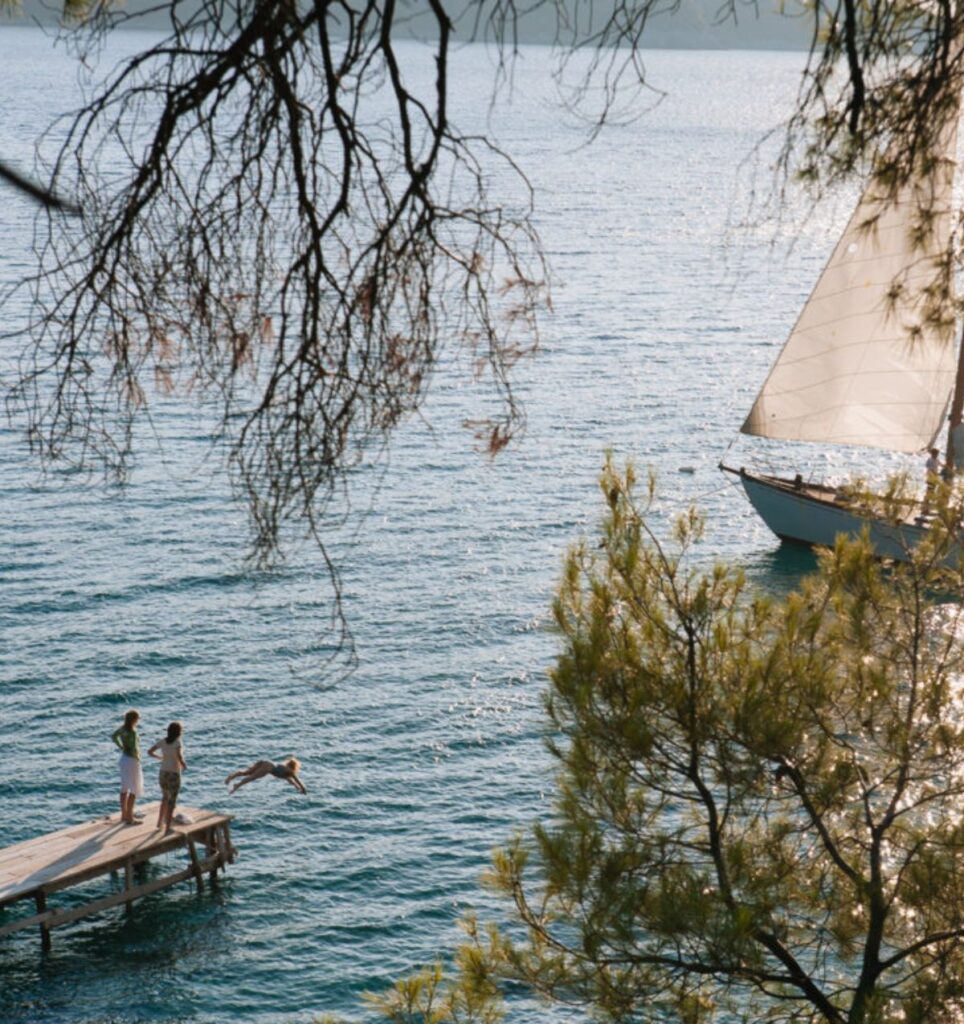
BEYOND THE ISLANDS: THE DANCING QUEEN CONNECTION TO PELION
Not every famous Mamma Mia! location is on an island.
The picturesque coastal village of Damouchari, on the eastern side of the Pelion peninsula, provided the setting for part of the film’s energetic Dancing Queen sequence.
With its traditional stone buildings, small harbour and dramatic natural surroundings, Damouchari offered a setting that felt wonderfully removed from modern city life.
For the production, the village’s waterfront became part of the musical spectacle, as Donna and the other women move through the village towards the sea.
Although Damouchari appears to belong naturally to Kalokairi in the film, it is actually located on the Greek mainland.
Visiting it therefore requires a separate journey rather than a simple boat excursion from Skiathos.
It is another reminder of how cleverly the filmmakers combined several beautiful Greek destinations to create one unforgettable fictional island.
WHERE THE CAMERAS STOPPED: MANDRAKI VILLAGE AND THE CAST
For Mandraki Village, Mamma Mia! is more than a film connected with the island.
It is part of the hotel’s own history.
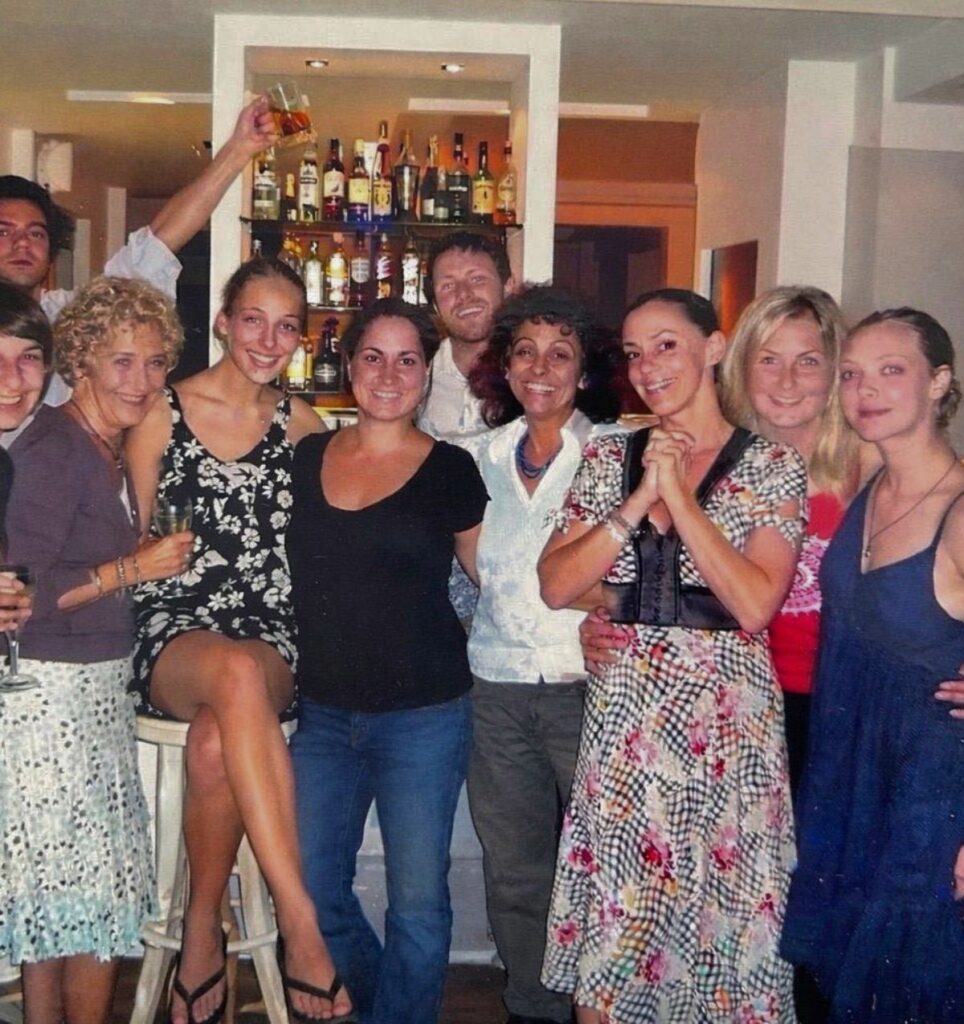
During the production in 2007, members of the film’s cast stayed at Mandraki Village, bringing a little of the movie’s extraordinary summer into the everyday life of the hotel.
Away from the cameras, the experience was less about spectacular musical numbers and more about the quieter moments between filming days.
It is this personal connection that gives the story a different meaning for Mandraki.
The hotel was not one of the movie’s filming locations. Instead, it became part of the experience surrounding the production — a place connected with the people who brought the story to life.
That history remains a special chapter in the hotel’s identity, connecting today’s guests with a moment when Skiathos briefly became part of an international film production.
For the full story, including the memories and photographs from that summer, discover The Mamma Mia! Story at Mandraki Village.
HOW TO EXPLORE THE MAMMA MIA! FILMING LOCATIONS FROM SKIATHOS
One of the advantages of staying in Skiathos is that you can experience part of the movie’s history without travelling far, while using the island as a starting point for exploring neighbouring Skopelos.
Begin with Skiathos Town.
Walk along the Old Port, discover the harbour that appeared in the film and continue through the narrow streets towards Agios Nikolaos Church. Both locations can be explored on foot, making them easy to combine with an afternoon or evening in town.
For the famous wedding chapel and Kastani Beach, plan a separate visit to Skopelos.
Depending on the season, ferry services and organised boat excursions connect the islands, with some tours specifically designed around Mamma Mia! locations.
If you prefer to travel independently, remember that the filming locations on Skopelos are spread across different parts of the island. Reaching them may require additional road transport after arriving by ferry.
It is worth checking current ferry schedules, tour routes and available time before making plans, especially outside the busiest summer months.
And if your holiday includes more than film locations, our Perfect Skiathos Itinerary offers inspiration for combining beaches, boat trips, island experiences and time to simply enjoy where you are.
A LITTLE MAMMA MIA! MAGIC EVERY SUNDAY
Some stories deserve to be revisited.
At Mandraki Village, the connection with Mamma Mia! continues through a summer tradition at White Bar Taverna.
On selected Sunday evenings during the hotel’s summer event programme, guests can enjoy an outdoor screening of the film beneath the Greek sky.
It is an experience that feels especially fitting in Skiathos.
After spending the day exploring the island, wandering through the Old Port or discovering the landscapes connected with the movie, there is something wonderfully nostalgic about watching the story unfold again.
The familiar songs, the atmosphere of a Greek summer evening and the hotel’s own connection with the production come together in a way that feels both personal and celebratory.
Discover more about Mamma Mia Movie Night in Skiathos and the summer experiences at White Bar Taverna.
FAQs
WAS MAMMA MIA! FILMED IN SKIATHOS?
Yes. Parts of the original 2008 movie were filmed in Skiathos, particularly around the Old Port and the area of Agios Nikolaos Church in Skiathos Town. However, many of the film's most famous outdoor scenes were filmed on neighbouring Skopelos.
WHERE ARE THE MAMMA MIA! FILMING LOCATIONS IN SKIATHOS?
The best-known filming locations in Skiathos are the Old Port, featured in scenes involving the three potential fathers, and the townscape around Agios Nikolaos Church and its clock tower, associated with the film's opening sequence.
WHICH GREEK ISLAND WAS MAMMA MIA! FILMED ON?
The movie used locations on both Skiathos and Skopelos, with Skopelos providing many of the best-known outdoor scenes. Additional filming took place in Damouchari on the Pelion peninsula, while studio sets were used for much of the production.
WHERE IS THE MAMMA MIA! WEDDING CHURCH?
The famous wedding chapel is Agios Ioannis Kastri, located near Glossa on the island of Skopelos. It stands on a rocky outcrop overlooking the Aegean Sea and can be reached by climbing a steep staircase.
WAS THE MAMMA MIA! BEACH SCENE FILMED IN SKIATHOS?
No. Several of the film's best-known beach scenes were filmed at Kastani Beach on Skopelos, including musical sequences featuring Sophie, Sky and Tanya.
CAN YOU VISIT MAMMA MIA! LOCATIONS FROM SKIATHOS?
Yes. The filming locations in Skiathos Town can be explored on foot, while the famous locations on Skopelos can be visited through ferry connections or suitable organised excursions, depending on seasonal availability.
IS KALOKAIRI A REAL GREEK ISLAND?
No. Kalokairi is the fictional island where Mamma Mia! takes place. Its appearance was created using real locations on Skiathos, Skopelos and mainland Greece, alongside studio-built sets.
DID THE MAMMA MIA! CAST STAY IN SKIATHOS?
Yes. Members of the cast stayed at Mandraki Village during the 2007 production, creating a personal connection between the hotel and the film's history in the Sporades.
YOUR OWN MAMMA MIA! STORY BEGINS IN SKIATHOS
Nearly two decades after its release, Mamma Mia! continues to inspire travellers to discover the Greek islands that brought its story to life.
Yet perhaps the most memorable part of following the movie’s locations is discovering that the real places offer something beyond what appeared on screen.
The Old Port of Skiathos is more than a film backdrop. It is a living harbour filled with island life. The chapel of Agios Ioannis Kastri is more than a wedding location. It is a remarkable place overlooking the Aegean. And the beaches of Skopelos are every bit as beautiful without music, choreography or a camera crew.
At Mandraki Village, that cinematic history meets the quieter pleasures of a Skiathos holiday: mornings among the gardens, days spent exploring the island and evenings that unfold at their own pace.
Because the movie may have introduced the world to Kalokairi.
But the real magic was always here.
Αφήστε μια απάντηση